A note for those who know exactly who they are!

There are moments in life when silence protects peace.
And there are moments when silence allows disrespect to continue unchecked.
This is not written out of spite.
It is written out of clarity.
Over the years, I have watched people move in and out of our family’s orbit—sometimes as friends, sometimes as colleagues, sometimes as people who benefited from proximity to my parents, myself, Rungyi, or our extended family in Uganda, British Colombia (The Mubanda’s) and community networks. #ItEndsWithUS #John #David #Jayne #Kabs
Some came with genuine intentions.
Others came with something else.
What I have observed, and what I will no longer ignore, is a pattern where certain individuals were comfortable benefiting from my parents’ name, generosity, relationships, and influence, while simultaneously showing disrespect toward their children, extended family, and the people who grew up around them in Ontario.
This contradiction became especially clear after the Bobi Wine campaigns. Many of the dynamics involved Baganda-Canadians or self-serving Banyankole-Canadians connected to UMCC, which for years was one of the most triggering spaces for me until I learned more about its origins through families like the Kiwanuukas. That helped me separate genuine cultural preservation from ego and opportunism. There is a difference between honoring Baganda culture with integrity and using culture, Christianity, or community spaces for access and status. Too often friendships felt transactional—whether seeking entry into Mbire networks or arriving as newcomers while dismissing long-standing Ontario based friendships like those with Rowena Kizito or the Kerto family from West Nile.
UMCC after 2007 often blurred culture, power, Christianity, and ego, and the result was messy. It is the sole reason I have ptsd from having an abortion because of the abuse of power in that church.
People experienced that period differently, and those experiences cannot be rewritten—especially for families who were impacted, like the Kiyagas. Big respect to the Kiyaga family. #DDUKA2017
Respect is not selective
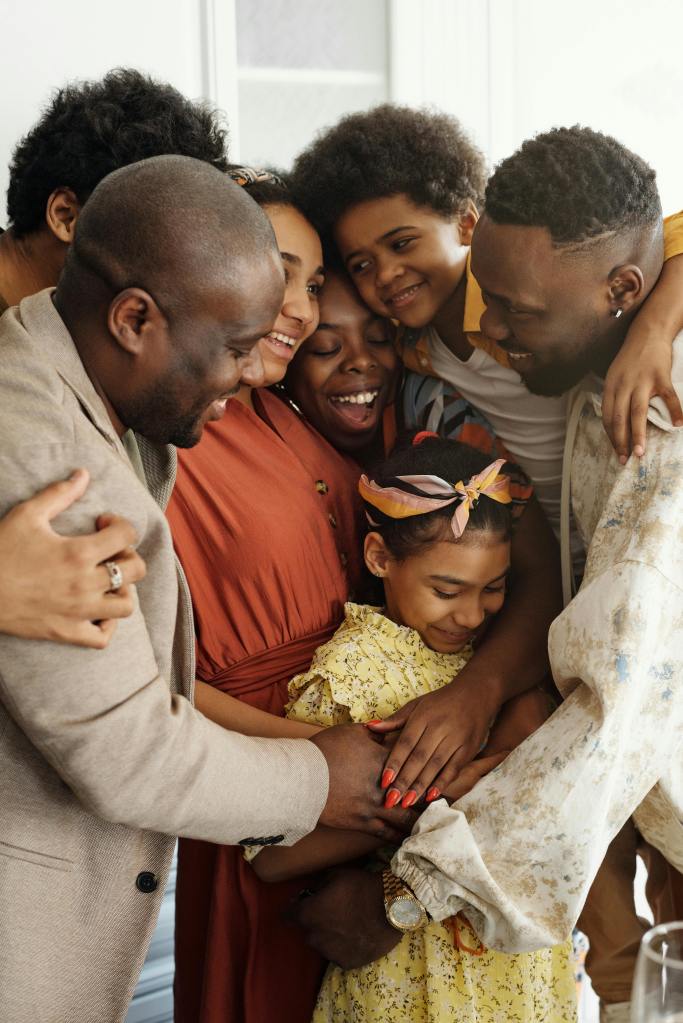
You cannot claim admiration for parents while undermining their children.
You cannot benefit from a family’s reputation while treating members of that same family as disposable.
And you certainly cannot move through community spaces using proximity to people—whether it is my parents, myself, or my cousin Nadia Matovu —while privately engaging in behavior that contradicts the respect you claim publicly.
Respect is not something you perform when it is convenient.
Respect is something you practice consistently.
Communities notice patterns
What many people fail to understand is that communities are observant.
People see who shows up sincerely.
People see who manipulates narratives.
People see who builds relationships based on mutual respect—and who builds them based on access, status, or opportunism.
You may believe that certain behaviors go unnoticed.
They do not.
The truth is that most people simply choose not to engage in unnecessary public conflict. But choosing not to engage does not mean people are unaware of what has happened.
A generational difference
Part of what we are witnessing is a generational shift.
Many of our parents and elders were raised in cultures where maintaining social harmony—even in the face of disrespect—was considered noble. They prioritized community stability over confrontation.
Our generation is learning something different.
We are learning that boundaries are not disrespectful.
Boundaries protect dignity.
Boundaries protect families.
Boundaries protect communities from cycles of manipulation that quietly damage trust over time.

What will no longer be tolerated
Going forward, I will not entertain dynamics where:
- My parents are praised publicly while their children are disrespected privately. That time is up Shambe Mutungi!
- Family connections are used as a social ladder for access to opportunities or credibility.
- People rewrite history in ways that erase the generosity and support that was extended to them. I – Sigyi Mulera – supported Shambe’s bullshit since I was under the age of 18. She is a bully.
- Individuals attempts to exploit our family in conflicts or narratives that serve their own image rather than truth.
If you have benefited from my parents’ kindness, networks, or mentorship, then the respectful response is simple:
Honor the family that extended that generosity.
Anything less reveals more about your character than it does about ours.
To those who act with integrity
Many people in our community have shown the opposite of what I described above. Brenda Kaye-for example. Thank you!!
She has demonstrated loyalty, humility, and genuine care for others—even while thoughtfully challenging some of the assumptions and mindsets often associated with Ankole circles, doing so with a level of humility and respect that keeps the focus on growth rather than ego.
People like her demonstrated something fundamental:
Relationships are not transactions, yet equity within so-called “elite” circles is rarely acknowledged or discussed in our generation—even as economic recessions have affected people across every tribe, race, and religion.
They are built through trust, shared experiences, and mutual respect over time. Regardless if you identify as a Muganda or Munyankole.
To those leaders and elder siblings with responsibilities, I remain grateful. You helped me as mini guides throughout my 20s.
May God continue to heal our land and foster more empathy across tribes, generations, career paths and whatever else people use to “keep score”. Thank you Val, Saida and Irene as well. Guidance helped.
#ShesAMukiga #StraightOutOfHerTwenties #ThankYouSarahRaymond
- Kabasigyi-Bakahondo
 HEAL GROW GLOW
Leave a comment